Three Global 6500 jets to boost Australia’s maritime surveillance

The Australian Border Force (ABF), which comes under the Department of Home Affairs, has contracted Metrea Australia to provide fixed wing surveillance capability across Australia’s extensive border.

Australia’s borders are quite unique in that they are all coastal, with much of the 60,000km coastline being very remote. The Australian Exclusive Economic Zone (AEEZ) being surveilled is 8.2 million square kilometers, a very large area that can be difficult to patrol in real-time.

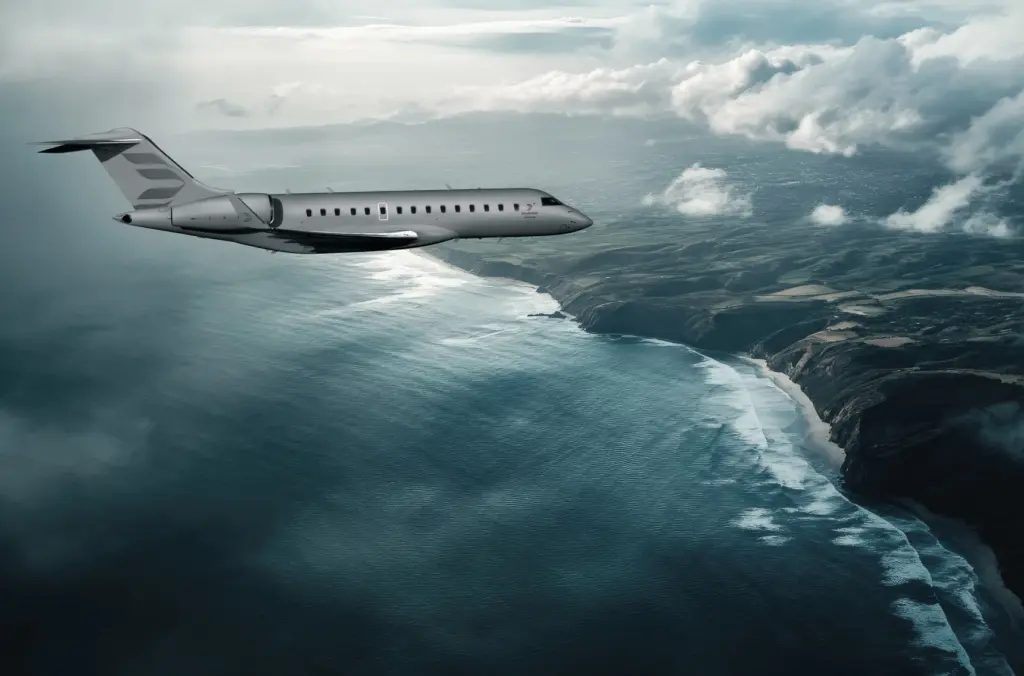
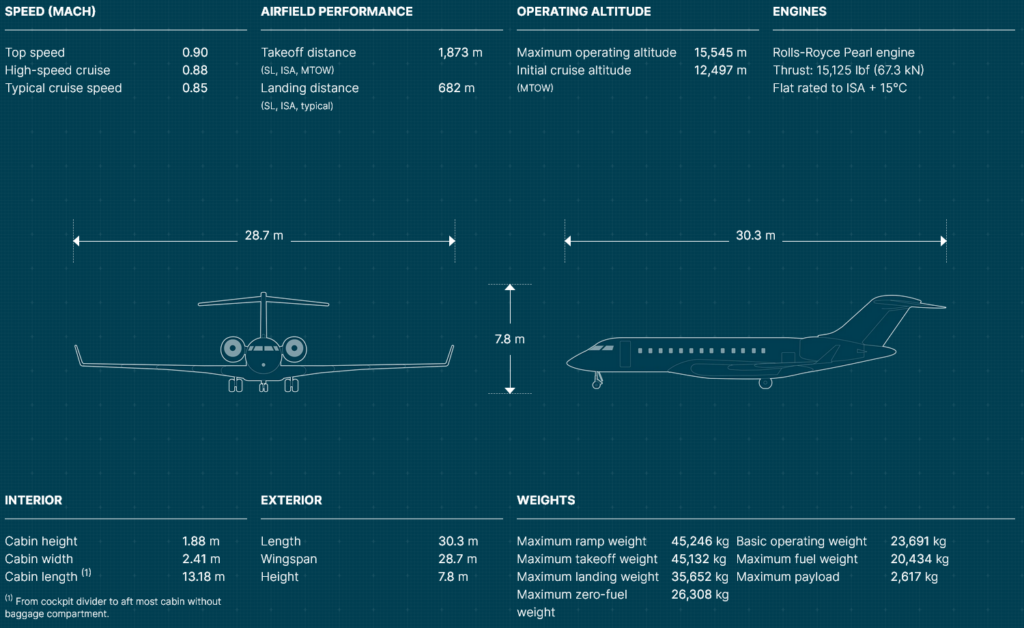
The new Bombardier Global 6500 aircraft will provide much needed distance, speed and endurance capability to the ABP. The 6500 has a 6,600-nm range and Mach 0.90 Mmo. Bombardier already supply Learjet and Challenger aircraft to the ABP, and also to countries like Canada, who recently ordered 6 Global 6500 aircraft fort heir RCAF.

Bombardier already has a maintenance facility in Melbourne and in Perth, so they are well equipped to service the aircraft as required.

A delivery date for the aircraft has not yet been announced, but it is expected to the second half of 2027.

Bombardier Global 6500 Specifications

How Turkish Airlines Owned a Continent: The Africa Strategy Decoded

Key Topics to Pre-Enter:

  • Stat: “TK serves more African destinations than any other non-African airline.”
  • Map Focus: Isolate the African continent on your Flourish map. Describe the “fill-in” pattern.
  • Reasons: Diplomatic ties, cargo demand, limited competition, Istanbul’s perfect layover point.
  • Impact: TK has served more than 120 nations worldwide, and the continent of Africa is by far their best place of their services, especially in unstable regions.
    Call to Action: “Have you flown TK within Africa? Share your experience.”

Sydney Airport’s Legacy

ICAO: YSSY

Sydney Airport is one of the very first airports to be built in the world. First established in 1919 as a intriguing superb legacy. The reason being is that a lot of it is

Triangular equations like equations like 30 percent of the field.

Sydney Airport - Wikipedia

The airport was renamed Kingsford-Smith Airport in 1936 after the famous Australian pilot Sir Charles Kingsford-Smith. These days the airport markets itself as just SYD.

SYD built it’s third runway, completed in 1994, to accommodate more passengers and aircraft to accommodate the growing amount of tourists up to the 2000 Olympics. However there were mass scale protests that occupied most of the area. This led to a curfew that restricts flight operations to and from SYD from 6:00am until 11:00pm each day.

Our favourite plane-spotting location is “Sheps Mound”, a purpose built area near the control tower for people to park and watch aircraft come and go. I have HEAPS of photos on my Instagram from this location.

Other nearby plane-spotting locations are

  1. “The Beach”, which is on the southern side of the airport
  2. Near (or even in) IKEA on Princes Highway in Tempe
  3. The nearby Rydges Hotel for an elevated view
  4. The end of runway 07 when the rare occasions the wind blows from the west.

Istanbul’s Unfair Advantage: Why Geography Made Turkish Airlines InevitableKey Topics to Pre-Enter:

  • Istanbul’s unique position: Istanbul was once called the geogrpahical centre of the globe. The reason being is that it made it to be the hub of the largest airlines in the world.
  • Comparison: The “East-Meets-West” hub vs. Doha, Dubai, Frankfurt. Istanbul International became the 5th busiest airport worldwide suprassing Doha, and being the 2nd busiest airport within Europe. Istanbul has provided more international destinations to many places than any other airline in history.
  • Brief history of the “Fifth Freedom” and how TK leveraged it.
  • Teaser: “Our upcoming map will show how this advantage was exploited year by year.”
    Call to Action: “What’s the most surprising destination you’ve connected through IST? Tell us below.”

Here’s a brief history of the Fifth Freedom and how Turkish Airlines (TK) has used it in its network strategy.


📜 What Is the Fifth Freedom?

The Fifth Freedom is one of the Freedoms of the Air—a set of commercial aviation traffic rights that countries grant each other through bilateral air service agreements. The concept originated from the 1944 Chicago Convention on International Civil Aviation, which outlined a framework for international air travel rights after WWII. While the first two freedoms (overflight and technical stop) were widely accepted multilaterally, the commercial freedoms (3rd, 4th, and 5th) required explicit negotiation between countries. (AHA)

Definition:

  • The Fifth Freedom allows an airline to carry revenue traffic (passengers/cargo) between two foreign countries on a flight that originates or terminates in its home country. (ICAO)

Example:
An airline from Country A flies from its home base to Country B, then continues to Country C, and is allowed to sell seats between Country B and Country C. (Australia)


🛫 Historical Role of the Fifth Freedom

✈️ Post-WWII Aviation Growth

  • After the Chicago Convention, freedom rights became the basis of structured global air travel.
  • The Fifth Freedom became commercially significant by enabling carriers to serve multiple markets on long haul routes, especially when aircraft range or market demand made nonstop flights infeasible. (AHA)

✈️ Mid-20th Century & Bilateral Treaties

  • Early bilateral agreements, such as the Bermuda Agreement and Bermuda II, included Fifth Freedom traffic rights for some carriers (e.g., Air India between London and New York via an intermediate point) to make long routes commercially viable. (Wikipedia)

🪪 Competitive & Economic Tool

  • Fifth Freedom rights have helped airlines fill planes more efficiently, add network flexibility, and stimulate competition on international routes. They have been both embraced and resisted by governments depending on whether they saw them as beneficial or as unfair competition to their national carriers. (Wikipedia)

🛫 How Turkish Airlines (TK) Has Leveraged the Fifth Freedom

Turkish Airlines—the flag carrier of Turkey with one of the largest global networks—has strategically used Fifth Freedom rights as part of its international route expansion and hub-and-spoke model from Istanbul, serving over 320+ destinations across the globe including within Turkey. (Wikipedia)

🌍 Network Expansion & Revenue Optimization

  • South America Example: TK operates services such as Istanbul → São Paulo → Buenos Aires where the São Paulo ↔ Buenos Aires sector is a Fifth Freedom segment, allowing revenue traffic between those two destinations even though neither is Turkey. This lets TK capture additional local demand beyond just Turkish outbound/inbound traffic. (Travel And Tour World)

✈️ Connecting Continents via Hubs

  • Turkish Airlines plans routes like Istanbul → Kuala Lumpur → Sydney—another Fifth Freedom usage—where the carrier can serve two foreign markets on one aircraft leg, increasing aircraft utilization and opening additional market segments without needing a separate nonstop service. (Loyalty Lobby)

🛫 Opportunistic Rights Agreements

  • In some cases, governments grant Fifth Freedom rights to TK (e.g., Shannon–Chicago cargo services historically), allowing it to operate services that wouldn’t otherwise be possible under regular third/fourth freedom rights alone. (Aviation Week)

🧭 Market Strategy

  • This use of Fifth Freedom rights supports TK’s broader strategy to position Istanbul as a global hub, linking Europe with Asia, Africa, and the Americas through multi-leg services that are commercially viable and competitive with other global carriers. (Antaeus Travel)

📌 Why It Matters

Economic viability: Helps airlines serve routes that may not sustain separate nonstop flights. (Wikipedia)
Network density: Enables broader connectivity through a hub without extra aircraft or slots. (Travel And Tour World)
Competitive advantage: Offers passengers more options and can stimulate competition on certain legs. (Australia)


If you want, I can map out specific current Fifth Freedom routes Turkish Airlines operates and explain how they differ from TK’s standard hub services.

How Turkish Airlines Owned a Continent: The Africa Strategy Decoded

  • Stat: “TK serves more African destinations than any other non-African airline.”
  • Map Focus: Isolate the African continent on your Flourish map. Describe the “fill-in” pattern.
  • Reasons: Diplomatic ties, cargo demand, limited competition, Istanbul’s perfect layover point.
  • Impact: TK has served more than 120 nations worldwide, and the continent of Africa is by far their best place of their services, especially in unstable regions.
    Call to Action: “Have you flown TK within Africa? Share your experience.”

How 16right ADB-S has proven how you can see what registered aircraft and airlines have flown to your airport.

16right is a website founded by Graeme Hutchinson, who is a Sydney Airport photographer who takes planes, and tracks aircraft. He has his domain of photos of aircraft that has flown to Sydney Kingsford Smith Airport in Sydney, Australia. These help to identify different emergencies, and different accidents that have taken place at Sydney Airport, but also to keep track of any plane (with the registry and make) that will be serving Sydney Airport. 16right has recorded a lot of data for Sydney Airport. 16right is an example of airline/aircraft search. 16Right is the most useful website I have been on since I have probably created a lot of things on there too

10 Surprising Facts We Learned Mapping Turkish Airlines’ Routes

Key Topics to Pre-Enter (as a numbered list):

  1. The first intercontinental destination was…
  2. The year they added the most new countries was…
  3. The most isolated destination (farthest from Istanbul) is…
  4. They entered [Contested Region] before any major European carrier.
  5. The “COVID Pivot”: They actually added [X] new countries during the pandemic.
  6. The shortest-lived destination was…
  7. They serve [Small Island Nation] with just 2 flights a week.
  8. The busiest new region of the 2010s was…
  9. A country they still don’t serve that surprises people is…
  10. Based on this growth, we predict the next new country will be…
    Call to Action: “That they aren’t really that promoted, or popular with western flyers”

Chasing the Flight Path: How We’re Mapping Turkish Airlines’ 25-Year Global Ascent

Key Topics :

  • From 2000 to 2025, Turkish Airlines has expanded to a worldwide connection of global routes and networks, especially connecting many destinations with Russia, Central Asia, the middle east, Western Europe, North & South America, Africa, East Asia, and South East Asia, and in recent times Australia.
  • Our multi-source approach: combining official reports, aviation databases, and community wisdom. How they connected different destinations from Istanbul was how they had located many dot points worldwide and different locations in the way that most other airlines have never done before. There state of the art service ahs ended up in having been ranked the 6th best airline in the world globally. However the new Istanbul Airport has had many complaints about the long distances between connecting flights towards different gates and terminals for connecting flights. Therefore this makes it Turkish Airline’s significant achievement in reaching all five continents worldwide.
  • A sneak peek: “Did you know TK first flew to Australia in 2024?” They had first flown down to Melbourne via Singapore in March, then in November they flew down to Sydney via Kuala Lumpur
  • The power of visual storytelling in understanding complex networks.
    Call to Action: “Follow this series or subscribe to be the first to explore the interactive map.” https://www.flightsfrom.com/IST/TK